 |
| Mount Grace |
This weekend, the Butler and I went to an
open air production of Sense and
Sensibility set on the grounds of Mount Grace Priory, a National Heritage
site. Mount Grace itself can be seen across
the fields on some of Big Nose Dog’s walks; the names of two houses in our
village boast of a priory view, now obliterated by mature trees.
Places like Mount Grace call on us to
create magic, I think. If you’re not
sure what I mean, could you walk through these grounds and not imagine what
went on there? That’s our innate ability to be in our minds where our bodies are not. That has to be magic, does it not?
 |
| Butler & Sis in front of chapel |
The site’s history that I know, starts with
a fourteenth century Carthusian charterhouse that survived only a little over
140 years of religious contemplation. Then Henry VIII sent Mount Grace on its travels
through various owners to the Lowthian-Bell family who gave us Gertrude Bell.
There’s a woman whose life makes the jaw
drop. Up in the manor's attic, you can see
where someone recorded the children’s heights, look at old family photos and
listen to staff talk about Gertrude; you won’t be thinking about monks and a
fat old profligate wanting a son, although all those things happened here.
Magic.
Imagine putting on open air theatre in such a place.
 |
| The Hamper |
The Butler packed a picnic for the
masses, although there were only we two.
We stowed canvas chairs and hamper and rug into Little Car, had to park
in the overflow area, so many people had come, and a few of those on foot. We claimed a space on a little rise at the back,
across from the old Carthusian guest house.
The audience included people from the Point
to Point set who brought fold-away tables covered with fabric cloths, dressed in their Dubarry
boots and wool jackets and stockman riding coats, although the group to our
right put an eighteenth century spin on the dress code. Here were the considered-successful of the
community, some, like the Butler, with serious day jobs, yet the desire for fun, for magic, it sizzled through the audience with childhood intensity.
 |
| The group next to us |
Neil Gaiman writes in his
latest book that none of us are adults, rather children inside adult bodies. Those of us who openly admit our need to
create, to imagine and pretend well into adulthood, we’re the ones who put on
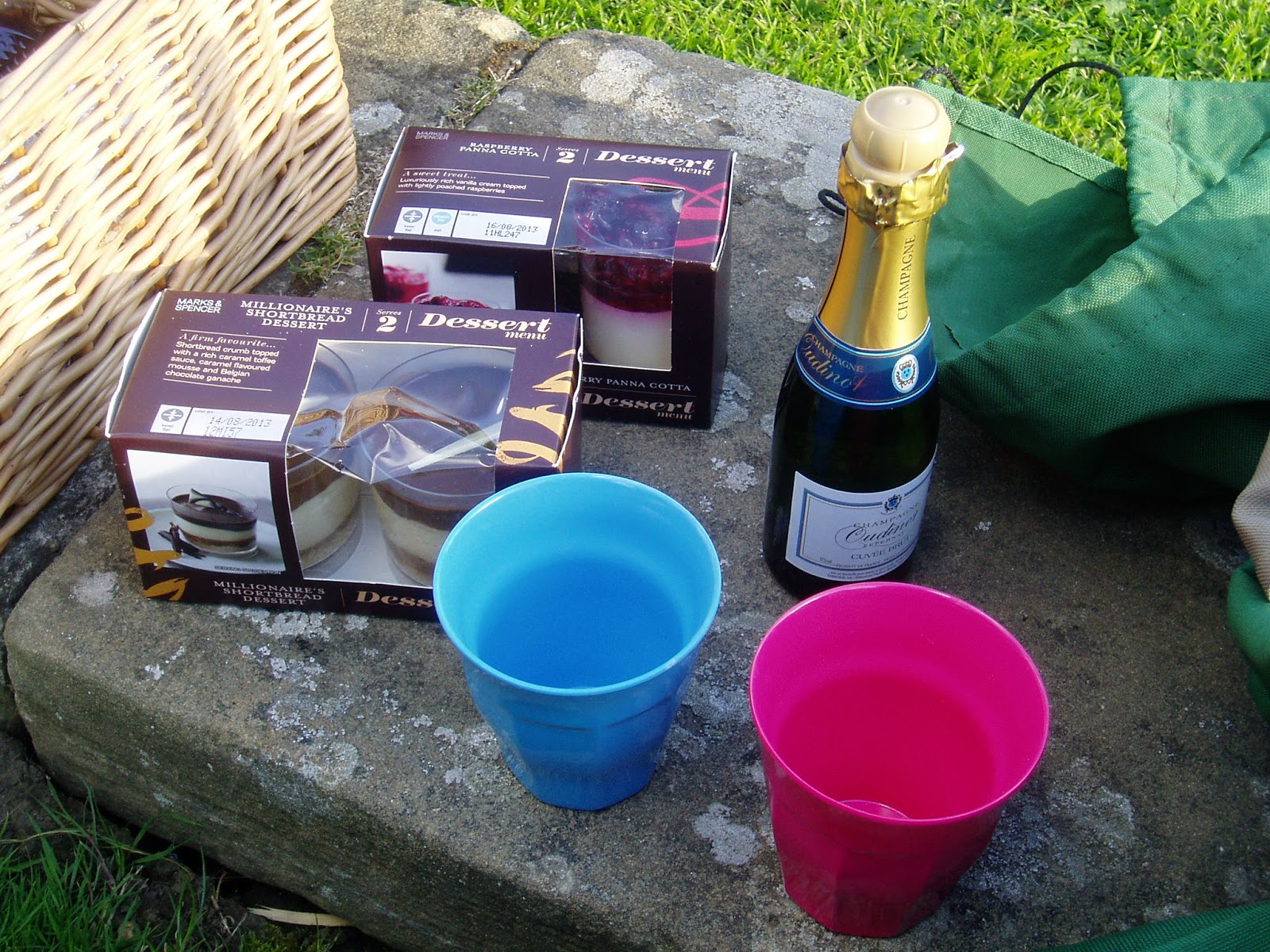
the period dress, pack two desserts inside the hamper (well, four, if you count the Betty's cakes and how could you not), drink champagne from children's cups.
Humans ache for opportunities to create,
whether it’s decorating the house, writing a play, sitting at a National
Heritage site to watch an open air performance that helps us imagine another
life in another time. It’s a fine line,
though, for those of us who are driven to create. More is asked of us, perhaps unfairly so.
Because we have the temerity to put our creations on show, we cannot purely create with the abandon of children, nor even stop at thinking about grammar
and structure, the indelible dramatic arc.
More important than bringing forth the myths inside us, we’re told the
world now wants us to count Twitter followers, blog hits, Likes and RTs. It’s the high school game of popularity taken
to a fiscal level. Be in, rather than be
creative.
For some of you, the two are the
same. For me, it’s hard work. There’s many a good intentioned person who’s
crossed my path to utter several Don’ts about what I write or how I write or
even that I write.
I thank whatever deity who hangs around me, that none of those naysayers actually live in my house, because it becomes
harder and harder as I read a blog about self publishing or how to utilise
social media, for me to keep the fun in what I’m doing. If those horrid little voices lived inside the
Writing Closet, I’d probably set fire to the thing and start taking
copious doses of Valium.
I don’t want my myths or voice to be
critiqued into someone else’s idea of what I
should say.
 The open air performance itself could be
hailed as good-enough theatre, an assessment that might disappoint some to
hear. But for me, it was a great success
because it was great fun. Nature graced
us with a soft rain during the second half, as well as a serious owl fight
somewhere on the hillside; bats kept flitting close to the stage and nary an
eighteenth century lady flinched.
The open air performance itself could be
hailed as good-enough theatre, an assessment that might disappoint some to
hear. But for me, it was a great success
because it was great fun. Nature graced
us with a soft rain during the second half, as well as a serious owl fight
somewhere on the hillside; bats kept flitting close to the stage and nary an
eighteenth century lady flinched.
When the play ended, we gathered up our
things by torchlight, I stopped between the manor and the chapel just to look, and it impacted me viscerally, what it would've been like to step out the back door at night as
a child and see the Priory’s ruins.
‘How magical it must’ve been,’ I told
the Butler.
And it’s that magic that I struggle to
hold onto.
