Saturday, 11 November 2017

In Only A Week

Acer leaves the colours of a Van Gogh.


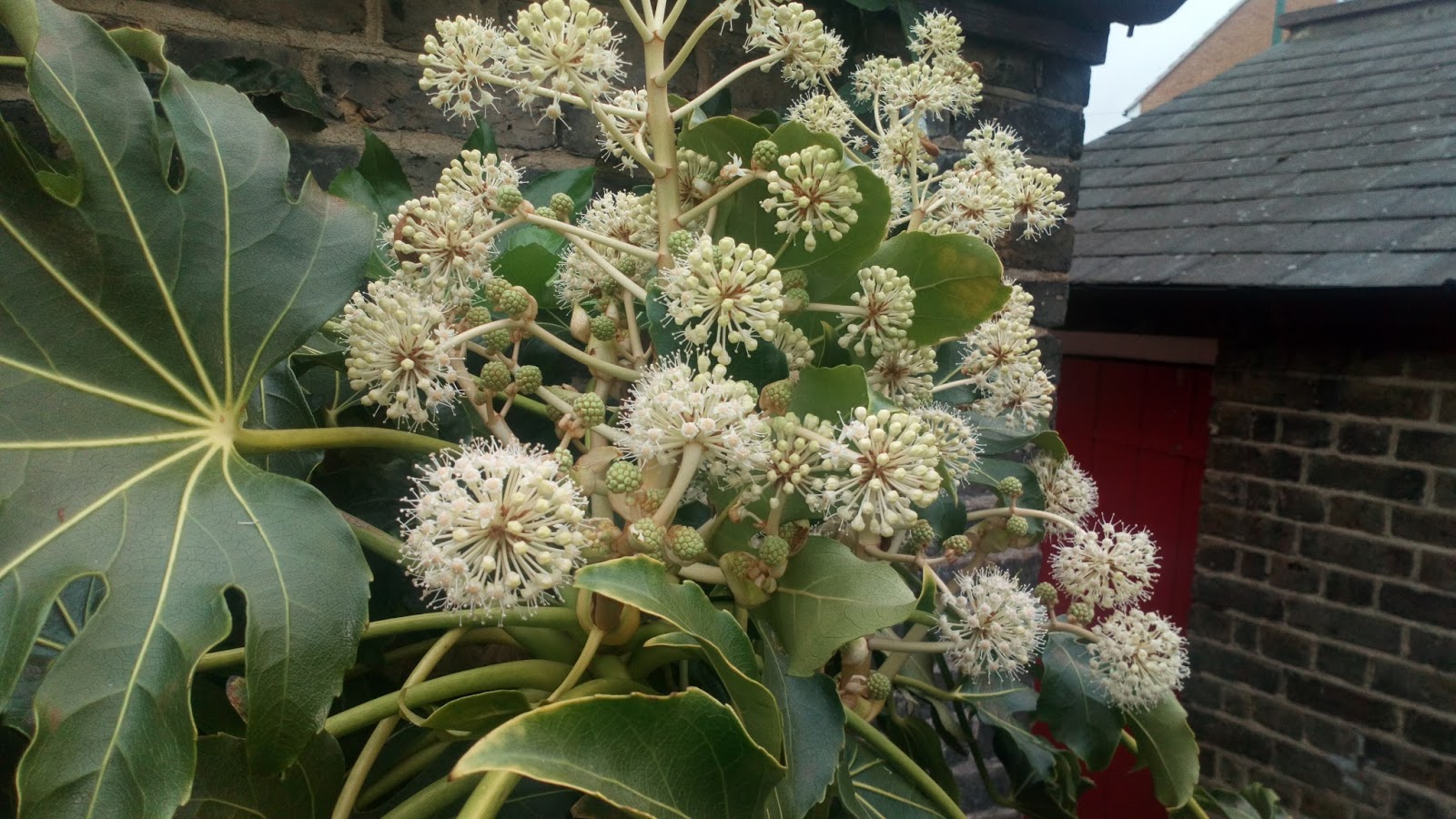
At this time of year, posting Six on Saturday highlights how much change happens in a lil ole week.  Bees are hand jiving in the fatsia japonica while the acer leaves that were golden only three weeks ago, are now shrivelling into a burnished copper.


1.  At the beginning of the week, I had to accept that the lawn needed one last mow.  CFS keeps me on a strict energy budget & mowing sends me into serious, angry-letter-from-the-bank overdraft.  I bit the bullet & bought an electric mower as my hoped-for solution.  No petrol smell, no petrol weight, no metal parts.  For the moment, a great & inexpensive solution to the year's last (anticipated) mow.  We'll see how long this light weight baby lasts, come next year.


My new mower.

2.  No surprise that bulb planting gobbled up a good portion of the week.  None of these bad boys were mad purchases of exotic new residents, unfortunately.  Rather, a clutch of brown bags containing bulbs that'd grown in pots - narcissus, tulips, daffs & some Can't Remembers (i.e., bulbs I didn't label so can't remember what the heck they are). 

Planting last year's bulbs is like getting a card from a really good friend who's moved away.  Except for the Can't Remembers.  That's more like reading what people wrote in my year book all those long years ago, wondering who they were & what they were talking about.


Old friends & forgotten favourites.


3.  Planting bulbs got me close & personal with what's already setting the stage for next summer.  My daisies bloom in late spring/early summer, so they didn't surprise me so much.


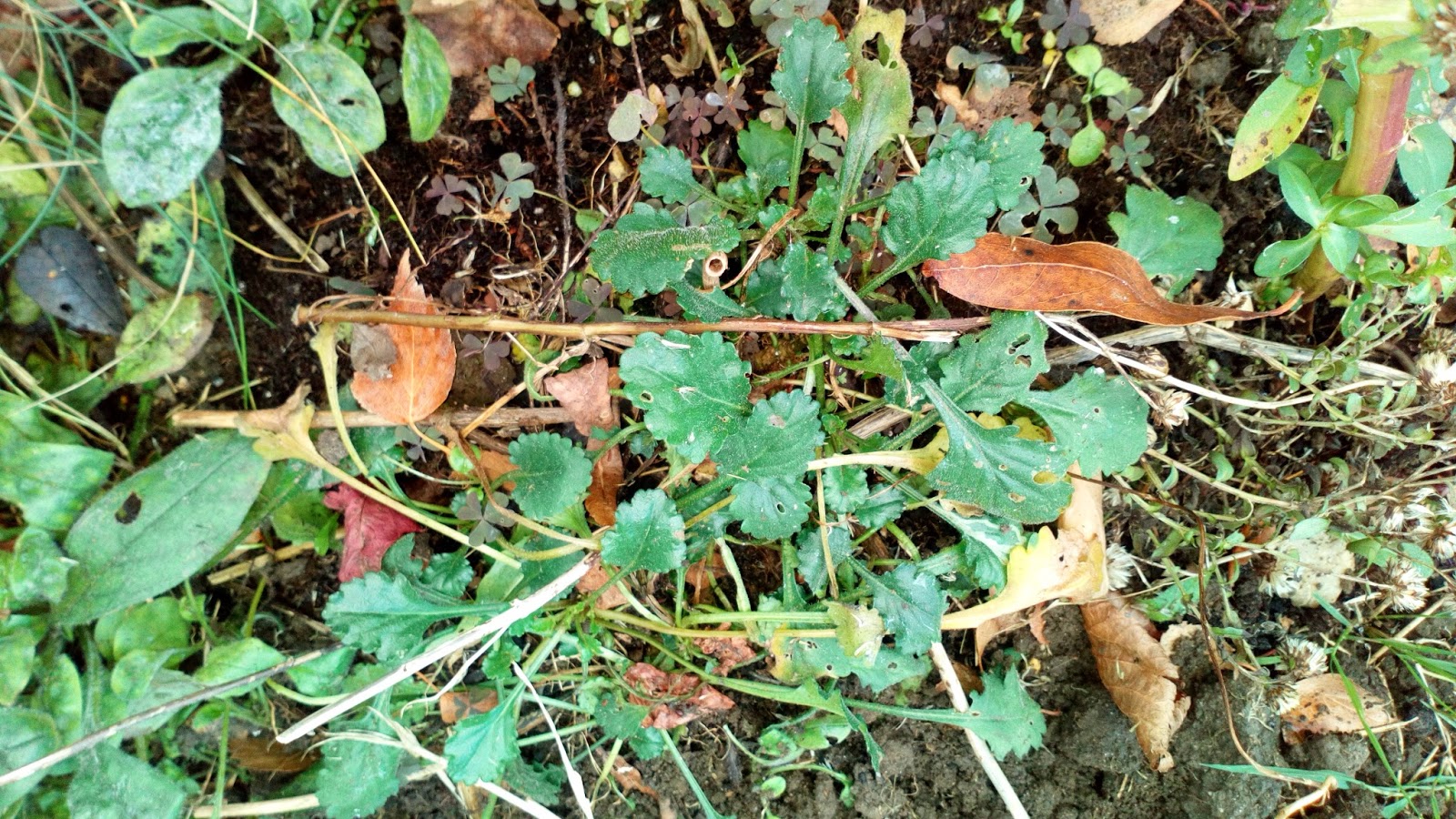
Daisy in waiting.


4.  But the Michaelmas daisies did surprise me.  On the other hand, this fella bloomed in mid-summer for the first time, so perhaps it's changing its game.


Aster getting an early start.

5.  I came across a little green stranger snuggling next to the purple sage.  Obviously not a weed, but what the heck . . . oh my goodness, how did I forget that I'd planted a sedum there this year?  Probably because after a short struggle, it'd withered away.  I'm very glad to see it didn't succumb.  This may've been a Purple Emperor, although here, it looks quite green.


The sedum lives!


6.  The last 10 years've been fairly nomadic for me, with a new garden every few years.  My current one is the first I've had with no pond.  But since there's a Doodle at our house, we must have water to splash in.  This week, the pool got drained for winter, with some help from said Doodle.


I think all the water's out now.

While I love the blousy look of late summer & early autumn, everything happening this week tidies the garden for next year.  The sudden neatness gives the whole place a feeling of anticipation.  I guess every week in the garden is a good week after all.

Once again, thanks so much for stopping by my little patch of the world.  Do check out the gardener behind Six on Saturday for his own six & links to all the other great Six gardeners.

Saturday, 4 November 2017

Covering the Ground

Until a few years ago, I was one of those crazy kids who enjoyed edging the lawn, the stepping stones, the borders, the mole hills.  What satisfaction, delineating my space!  Then I contracted CFS which keeps me out of the garden for an eternity at a time (okay, for days at a time), so I've had to come up with energy saving hacks.  Here's what one of those ideas - ground cover - is doing this week.

1.  Way back in the spring, I did a test pit in the flower bed of both chamomile and Irish moss.  For those more knowledgeable than myself, you may scratch your head over the chamomile, but it was sold to me as ground cover.  At the beginning of November, this is my chamomile test pit (the brown stuff with a few lingering white flowers). 


Chamomile with cosmos & iris.


Even as it fades, it hits me mid-thigh, so about 24 inches tall.  Its height kept it from entering the ground cover areas of my garden, but I really did love the spread & lightness of the blossoms, so here it stays, waiting for next year.


Chmomile with Mizzy BunnyButt for scale.


2.  The Irish moss did what it said on the tin - grew like a barn on fire, covered itself with lovely, tiny white blooms, then stayed a tightly packed, delicate foliage.  I moved it from the pit to between the stepping stones where it kept most of the weeds at bay.


Irish moss with only a few weeds after weeks of neglect.


3.  Excited that my anti-work idea was, well, working, I scoured the internet for ideas (here's a good site) & filled some other spaces with Leptinella Platt's black brass buttons.  I'd discovered these bad boys too late in the season to see them bloom, but by golly, that didn't matter.  Look at that divine foliage!


Platt's black brass buttons


In a very short time, these beauties were swamped by grass & weeds.  This week, I rescued them & safely potted them up for winter.  I'm thinking that next year, they may live with one of my potted trees.

4.  After moving the brass buttons, I filled the gaps with my old friend, creeping thyme.  My favourite combo for creeping thyme is lavender.  The combined scents during weeding makes me swoon.  Couldn't really plant lavender here unless I wanted hopping, rather than stepping stones.


Purple creeping thyme.


5.  There's a pretty ugly cement path from my back door.  Not only is it ugly, but it's in a shady part of the garden.  Apparently, purple New Zealand bur is shade tolerant, its foliage colour varying according to how much light it gets.  I planted it along the cement path where it proved a fast grower & gave even the creeping buttercup a run for its money.


New Zealand bur smudging the path edge.


However, grass fights a better fight against it.  Even so, both these photos are after weeks of neglect, so not bad at all, in my opinion.


New Zealand bur fighting the grass.


6.  You've been so helpful in identifying the strangers in my garden that, as in previous weeks, my last entry will be one of the Great Unknowns.  This plant has woody stems about 12 - 15 inches tall, had small yellow flowers on it mid-summer that reminded me of miniature Rose of Sharon, & now has these wonderful red seed pods on it.  Its rate of spread would indicate it has a World Dominance gene.


This week's Great Unknown.


Thanks for stopping by again this week.  If you enjoyed my Six on Saturday offerings, drop by The Propogator for his Six & links to other gardeners' Six on Saturday posts.

Saturday, 28 October 2017

Six Things Great & Small


Big Nose Dog ready for trick-or-treaters.


Oh my goodness me, it's nearly Halloween!  A day everyone in this house looks forward to, including the dogs.  A garden wouldn't be my garden if there weren't a pumpkin patch in it, but since moving to the UK, the results haven't always been what I'm used to.


Which brings me to my first of the six.  The pumpkin.

1.  This variety was billed as prolific, with fruit the size of footballs.  I'm nothing if not gullible & got several plants.  One lone, tennis-ball-sized midget is the year's full crop.


My jack-o-lanterns will be courtesy Asda this year.


After only 18 years, I need to admit defeat & research growing pumpkins here.

2.  Here's something tiny that I'm not going to complain about.  With the various critturs that run through the garden, it's a gift, finding one of these fellas intact.


Fancy little parasol.


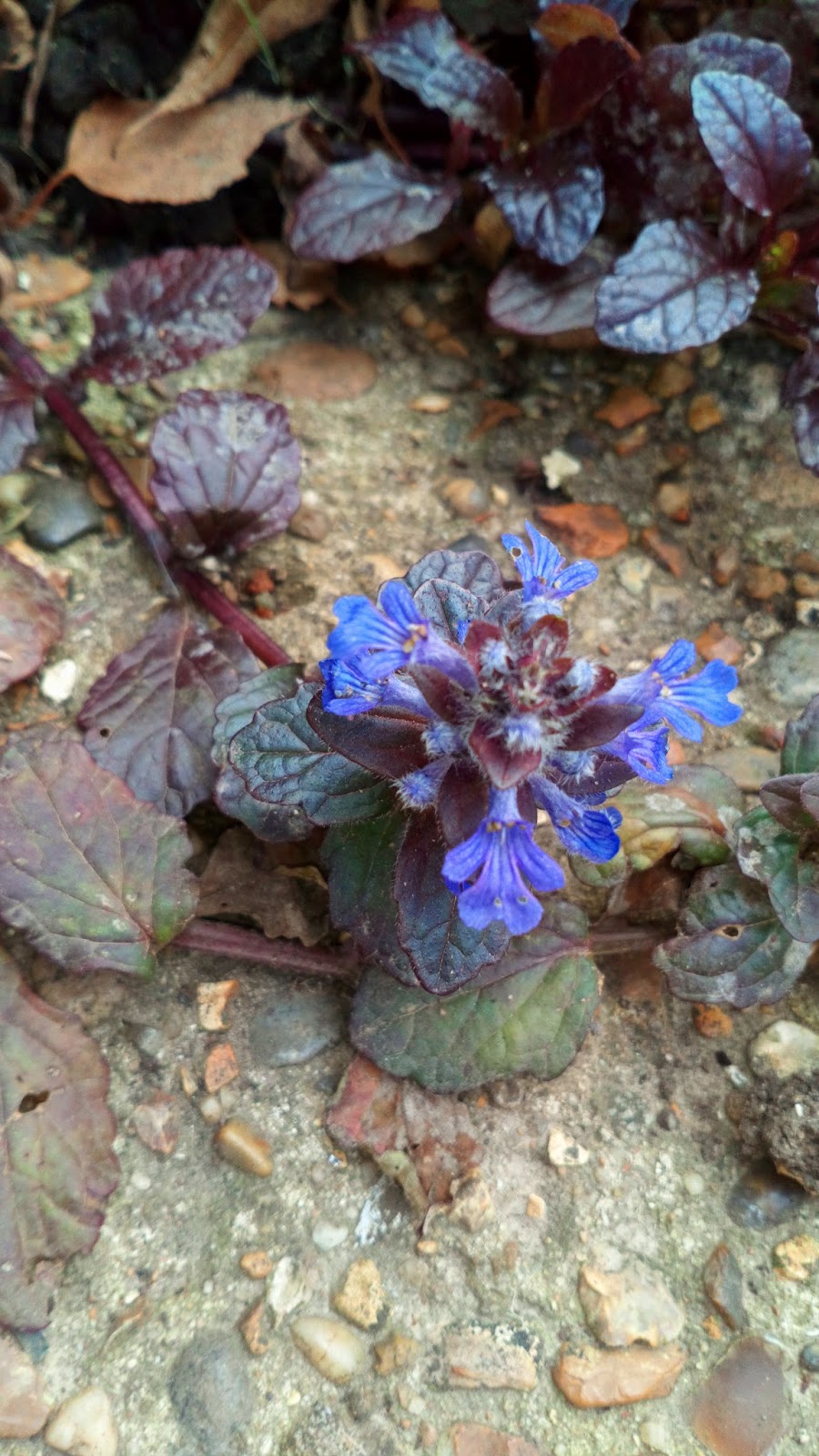
3.  The last of the small guys, the bugle weed always meets black tie standards.


Creeping across the pavement, headed toward the lawn.


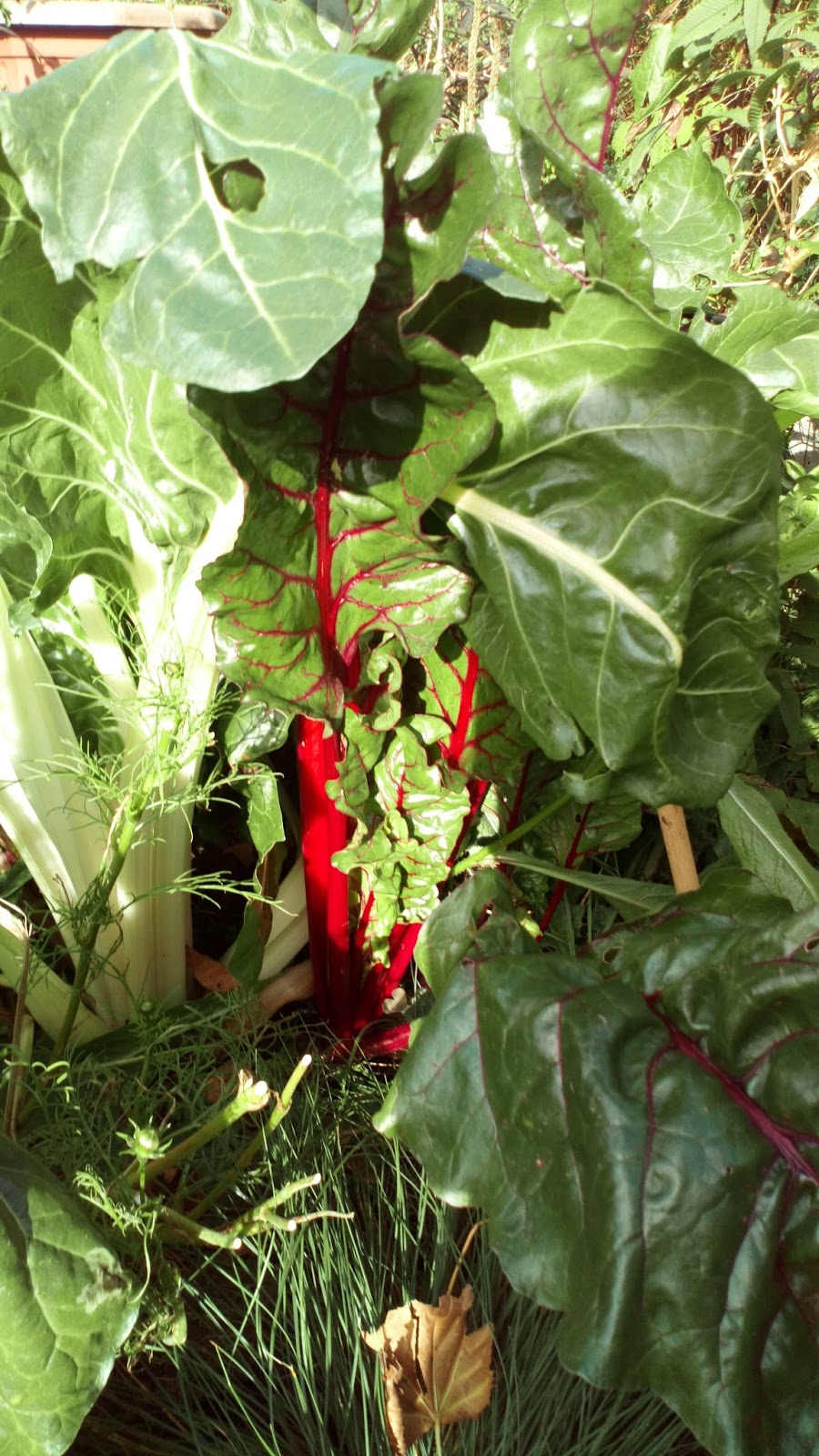
4.  Now for the big guys.  I got chard seed as a stocking stuffer last year, not something I knew much about.  


Beautiful foliage.


It grew like wildfire, so we gamely looked up recipes, cooked our hearts out & came to the conclusion we aren't chard eaters.  The neighbours were grateful, however, and I love how it looks, so'll probably plant it again next year.


Stunning colours.


5.  The other large finalist is a thistle that self seeded in the border.  Enticing to gold finches, I tell anyone who looks askance at it, but secretly, I simply love a good thistle.  


Love the flowers.


My phone camera doesn't do the colour justice, the darks & lights in one bloom.  This one's a beaut (although the fuschia behind it might disagree).


6.  The last selection will be one of several Unknowns in the garden, most inherited, though some self seeded.  These lovely, delicate things grow in any pavement crack they can find, have bloomed most of the year and even now, valiantly resist the cold.  Any idea what it could be?


Tubular yellow blooms, leaves similar to a bleeding heart.


Hope you enjoyed visiting the garden.  Our Artistic Director & I look forward to next week's Six On Saturday.


Mizzy Bunny Butt, aka our Artistic Director.

Check out all the other Six On Saturday contributors at The Propagator's site.


Saturday, 21 October 2017

My First Six On Saturday

Autumn, absolutely!  It's messy, unshaven, hems split open & chignons coming undone but I adore this time of year, the way the world feels, outside in the thick of things.

1. The fruits & colours.  Here, the ornamental cherry colludes with an acer in party dress.


2.  The last ditch harvest.  Our first year growing saffron crocus, which essentially grows itself.  Although they apparently do better in the ground, ours are in planters - getting down on my hag-self knees in order to pluck the saffron out . . . well, it ain't happening.  The tweezers method of collecting explains why saffron is so expensive.


3.  But there's still plenty of blossoming going on.  The never ending calendula.


4.  These wonderfully prolific bulbs found at a village plant stall years ago which I think are hesperantha, but correct me if I'm wrong.


5.  Of course, the magnificent fatsia japonica wreaking bee ecstasies with its subtle but gorgeous scent.


6.  Lastly, the elephant garlic sticking out their tongues at the promise of next year's cooking adventures.


Be sure to check out  The Propogator for all the other great Six on Saturday gardens pinging there!

Thanks for stopping by.


Saturday, 25 February 2017

Waga-Laksa Noodles

When we’d visit El Punko during his long ago undergrad days, we usually went to Wagamama’s for lunch.  This past Christmas, the little dickens slipped a Wagamama cookbook under the tree for his old hag of ma who’s finally learning how to cook. 

Getting ready to cook chicken tama rice.


The book itself, which includes a DVD, takes the mystery out of Japanese cooking while convincingly selling the company ethos.  To do the latter, there’s a sacrifice of recipe photos for Happy Cook and Happy Customer shots.  


As luck would have it, the first recipe I took a stab at – chicken tama rice – had no photo.  It had garlic.  It had ginger.  It had wine and mushrooms and sesame oil.  How could it fail?

Right, like why suspect an online dating profile without a photo?

It's a fiddly recipe – hours of marinating the chicken, then grilling and slicing, followed by sequential quick quick quick cooking of the other stuff.  Then thickening of the sauce with cornflour, an egg briefly cooked so it wouldn’t curdle, a dollop of sesame oil and are your noodles ready?

I’d opted for bulgur wheat, which I dearly love.  My version turned out like this:

My chicken tama rice.

And tasted about as bland as it looked.

Other’n the bulgur wheat, there’d been no Hag Improvs.  Either the wheat soaked up all those flavours or the recipe itself was too bland.  So I thinks to meself, what is it I like in the flavour department?  I couldn’t get my mind off the laksa soup recipe by Lucinda McCord.

I didn’t want soup.  I wanted a noodle dish.  It seemed logical that the first step into making something I loved – study the Wagamama book.  Here’s what I learned. 

Marinade the meat in a sauce you like.
Grill or stir fry the meat, then remove.
Stir fry the veg.
Add the main sauce you like.
Put veg on noodles.
Top the veg with your meat.

I could do that.  Below is the concoction I came up with that gives me laksa flavour in a noodle dish.  I’ve got 3 sets of ingredients here, so if you’re making a grocery list from this, scroll down for all of it.

Marinade


Marinade
2 chicken breasts or 270 quorn (or mixture of the 2)
1T horseradish
1T honey
1T Mirin (or port)
4T oyster sauce


Combine ingredients in a shallow bowl.  If you want to grill your chicken, don’t slice it.  If you want to stir fry, then cut into bits.  Cover & marinate in the fridge for at least three hours. 

Sauce – made in a handheld food processor
6 spring onions
1½” ginger, grated
2 garlic cloves
4T desiccated coconut*
3T peanut butter
5-6 limes  (I like my lime.  If you want the lime to be more subtle, use 3 limes.)
1T muscovado sugar

Making the sauce.


I usually make the sauce right after I make the marinade so that it can sit & get itself all flavourful, but it’s pretty good when it’s cooked right after making it.  

Chop the onions, grate the ginger, press the garlic, slap in the peanut butter & sugar.  Squeeze out the lime juice.  If you like a real kick of lime, take that old grater you used on the ginger & make yourself some lime zest.  


Blend it all up.  If you don’t have a small blender, chop the chili & onions up very fine – a curved herb cutter works really well here – then mix it up well with your other ingredients.

I prefer a 2 bladed herb cutter.


*If you like a creamy sauce, omit the desiccated coconut.  Later, you’ll add either a tin of coconut milk or a packet of coconut paste as explained below.  If you use coconut milk, you’ll need to thicken it with cornflour, which I’ll tell you about when the time comes.


Other ingredients
1 tin coconut milk OR 1 packet coconut paste for creamier sauce
Corn flour, if you use coconut milk
1T duck sauce
Rice noodles, whatever thickness you like (very-fine in the photos)
Cooking oil of choice – I tend to use rape seed oil, but I also always seem to have left over oil from the sun-dried tomatoes & that works really well, too.
Sesame oil to drizzle

Colour!
Veg – whatever you have & like, with an eye to giving yourself some variety in colour – bell peppers, red onions, mushrooms, peas, broccoli, spinach, or more traditionally oriental style veg.  When I cook this for Siobhán (who hates veg), I have to temper the visible veg content down quite a bit.  My trick is to spiralise courgette & carrot, then add them to the noodles to hide the fact she’s eating veg.  It seems to work.  Even though she knows the veg is there, she can’t see it and so really loves it. 

Ding dong formation.

My spiraliser was a free gift with an order, so isn't a high grade model.  You can see from the photo that the middle never gets touched, so forms a little ding dong.  If your spiraliser does the same thing, cut the ding dong off in small sections & toss in with the rest of the veg.


Note on veg prep.  You can compost all your veg scraps or you can put them in a freezer bag to make veg stock later.  This includes everything from roots on the spring onions or stems of herbs, outer skin of garlic or onions, ginger peelings if you peel yours (which I don’t), thick stalks from broccoli & asparagus, etc., etc., etc.  Put the bag into the freezer & add veg scraps until the bag is full, to make your own veg stock later a la Thug Kitchen.

Now to cook it all up.

Break up the noodles into a medium bowl, 

Broken noodles.

cover with boiling water, then cover the bowl with a saucer.  
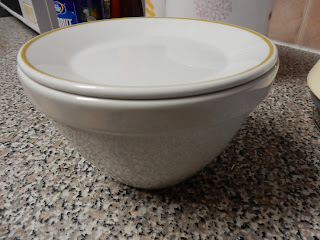
Add boiling water & cover.

I leave this on my plate warmer.  It takes about 15 minutes to cook properly, so you can cut up your veg while this is happening.

Grill or stir fry the meat or quorn, including all of the sauce.  If you grill the chicken, slice the cooked meat up when it’s done. 

Two handed stir fry.
If you stir fry, let the wok heat up until it’s nearly smoking.  Put in a little bit of the cooking oil (1-3T), then cook the meat for a (very) few minutes.  Being squeamish about raw meat, I do a bite test on the largest piece to make sure it’s all well down.  Using tongs (so that some of the marinade is left behind), put the cooked chicken back into the bowl, cover, & set on a plate warmer while cooking the rest.

Hiding the veg in the noodles.

If you’ve spiralised the courgette, give it a bit of a quick stir fry now in the leftover marinade, then put it on the plates (also on the warmer).  Add a little more cooking oil.  While it heats up, refresh the noodles with cold water, then divide between the plates.  I mix the spiralised courgette with the noodles so that Siobhán can’t see it.

Stir fry the garlic & ginger for about 10 seconds, then add the rest of your veg.  Stir fry for about a minute, then add the sauce.  If you’re not using desiccated coconut, let this cook for about a minute before adding the coconut milk or paste instead. 

Cooking the veg.
If you used coconut milk, make a paste with about ½ t corn flour & the tiniest bit of water.  Add about 2T of liquid from the wok & mix well.  Put this combination back into the wok to thicken.

Cook until the veg are the texture you prefer, then stir in the duck sauce for a few seconds only. 


Put the veg & sauce on top of the noodles, then the chicken on top of the veg.  Give it all a drizzle of sesame oil & enjoy!

Waga=laksa noodles.

Saturday, 11 February 2017

World Peace Cookies Even the Tired Can Make

With a name like World Peace Cookies, you’d want to eat them by the bushel.  The fact they’re packed full of chocolate will transform everyone you know into a peace activist.  But the truth is, they can be slightly labour intensive if you don’t have an electric mixer.  More than slightly if, like myself, you have health issues.

So along with the recipe stolen from Dorie's Cookies, I’ll give you a few Hag Improvs for the energy impaired. 

Nary a knife slimed.

170g all purpose flour
28g unsweetened cocoa powder 
½t baking soda
155g unsalted butter
50g sugar
134g light brown sugar
½t fleur de sel or ¼t fine sea salt
1t vanilla extract
150g baking chocolate


Vegans =>  Substitute butter with a non-dairy margarine & make sure your chocolate is dairy free.

Cube the butter cold from the refrigerator to avoid sliming up the knife.  (A soft margarine won’t need to be cubed.)  A large sharp bread knife makes this easier than the eponymous butter knife, so wield the wicked blade & avoid an energy zapper.

Resident butter thief.
Cold butter is hard to mix into a dough or batter.  I put the cube plate on top of a plate warmer to soften the butter while I chop up the chocolate.  What you don't see in the photo is that the plate warmer’s inside the nuker.  That’s because I live with a Doodle whose thievery skills rival the Artful Dodger.  She not only can pick your pocket without detection, but has also lifted a Pyrex dish of cooling fish pie off the counter and onto the floor with only the softest of thumps.  AND she’d run past chocolate to steal butter.  Thus, the warming butter tucked safely out of Doodle harm. 

If you don't have a plate warmer, time will do the work for you & bring the butter to room temperature.  But if you do use a plate warmer, make sure that the butter doesn’t melt.  Your baked cookies will be flat & crisp if it does, rather than fat & chewy.

Break the chocolate into the pre-formed segments, then cut the segments in half.

In a medium bowl (not the one you plan to mix the dough in), sift the flour, cocoa & baking soda.

Ingredients for tomorrow's cooking.

On some days, that’s enough upper body work for me.  My Hag Improv for labour intensive recipes such as this, is to prepare the ingredients & store them in separate containers, leaving the mixing and/or cooking part until later.  I often use the time after dinner for congregating my fixings so that the next morning, I’m ready to bake.

Whenever it’s done, the next step is to cream the butter or margarine with the 2 types of sugar.  Once it’s smooth, mix in the salt & vanilla.  Add the sifted dry ingredients & stir until it’s nice & smooth.  


Dorie says her dough varies, but so far, mine is always a nice glossy ball that unfortunate leaves behind not a bit of chocolate to be licked from the bowl.  Lastly, add the chocolate chunks.

Separate the dough into quarters, then roll each quarter into a log that’s about 1.5” in diameter & about 12” long.  Double wrap each log in cling film & freeze for a minimum of 3 hours. 

How yum is that?

This gives you 4 cookie batches that you can cook all at once or take out of the freezer as needed.  If you have friends who pop over, they’re going to love you for your World Peace Cookies baked while they wait.  

If you’re an introvert, you may want to keep the little guys a secret, to avoid unexpected visitors.


When it comes time to have cookies, cut your dough into 1” slices – each log gives you a dozen cookies.  (Dorie cuts them in half inch slices, but an inch is the perfect size for me.)  If the dough crumbles, just bunch it together in a pile.  As it cooks, the pile will melt into a single cookie.

Bake on a paper lined tray at 190C/170 Fan/Gas 3 for 12 minutes.  They’ll look a bit under done when you take them out, but trust me, they’re perfect.  


Saturday, 4 February 2017

The Great Hag Soda Bread Fest

There wasn’t a reason for me to learn how to make soda bread.  Being married to a Dubliner who’s also a cook, I live in a world where freshly made soda bread slathered with gorgeous stuff . . . well, it’s a requisite for civilised life.  If I hadn’t stumbled across a recipe in Mary Berry’s Foolproof Cooking for a savoury version, there never would've been the Great Hag Soda Bread Fest.

The double spatula method for prissy folk like me.
Soda bread is actually quite easy, if you pay attention to what you’re doing.  An essential caveat in Hag-dom, as you’ll see.  

500g pain flour
1t baking soda
1t salt
284ml buttermilk
200ml milk
Optional: herbs, berries or nuts 


Preheat oven to 220C/200 fan/Gas 7.  Mix the dry ingredients (including dry herbs if you’re using them), then slowly add the buttermilk, making sure it’s mixed before you add the milk.  Turn out on a floured surface to make sure the dried ingredients in the bottom of the bowl are fully mixed but only mixed – DO NOT KNEAD.  Add fresh herbs, nuts & berries, if you're using them.  Put on a paper lined baking tray.  Some people cut a cross into the top while some actually nearly quarter the loaf.  I often forget to do either.  Bake for 30 – 40 minutes, then cool on a wire rack. 

Now about that paying attention craic.  Here’s what soda bread looks like when you confuse baking soda with baking powder – a middle with the consistency of cheese (I think that means raw).  
 
And this was my Christmas mistake, no less.

In usual Hag-not-paying-attention-to-detail form, I didn't research the ingredients for my first batch of Foolproof savoury soda bread. You can see from this picture that the cranberries are fresh.  Don’t use fresh unless you like your cranberries really REALLY sour.  Dried cranberries have just the right balance of tart & sweet.

Fresh cranberries, the pucker's friend.

One day I decided to make a loaf with herbs & one without.  I made the second loaf from memory, so put in too much milk.  As the loaf began to bake, it started to spread out & go flat.  I lifted the partly cooked mess by the baking paper & dropped it into a greased loaf pan.  It ain’t pretty, but it tasted fine.

Like trying to squeeze into a girdle.

HAG IMPROVS (aka variations).

We noticed that my bread was lighter than Siobhán’s & wondered if it were a difference in recipe or cook – too enthusiastic mixing can change the texture of your soda bread.  Her recipe called for 2 cartons of buttermilk rather a mix of buttermilk & regular milk, as well as only 425g of flour.

Siobhán tried my recipe with the same results that I had.  Our conclusion is, if you want a denser bread (great for making sandwiches or dipping in soup), then use 2 buttermilks & less flour.  If you want something a bit lighter for your jams & spreads, try using one buttermilk & 200 mls of regular milk.

Siobhán often replaces 50g of regular flour with whole meal.  This makes the bread more ‘rustic’, heavier in texture, with a stronger wheat flavour. It's also more crumbly, so sometimes your sandwich'll fall to bits.

Cranberry & herb.
SAVOURY SODA BREAD.  Different herbs retain their flavour better through the cooking.  Rosemary is incredibly strong, while basil remains subtle.  Start with 3T & modify to suit your own taste.  

Most of the herbs we think of as Mediterranean make the bread taste great with any tomato based dish, be they soups or pasta or meats.  The Foolproof recipe’s 50g sundried tomatoes & 75g olives also enhance Italian herbs.

Adding berries makes this a great bread for sweet spreads like jam.  It’s even better when toasted for breakfast or a late night snack.  Berries with sliced almonds . . . well that’s pure ecstasy.  I tend to use 75g of each.

As a non-cook, I’d rated the idea of making soda bread as the soufflé category of difficulty.  Pretty silly when you consider how many homes relied on soda bread for a mainstay of their diet.  So if the thought of making soda bread intimidates you, trust someone who spent 60 years outside the kitchen – it’s one of the easiest recipes I’ve tried so far, yet one of the best tasting breads there is.  

What could be better?  

Plain or savour?  Both!